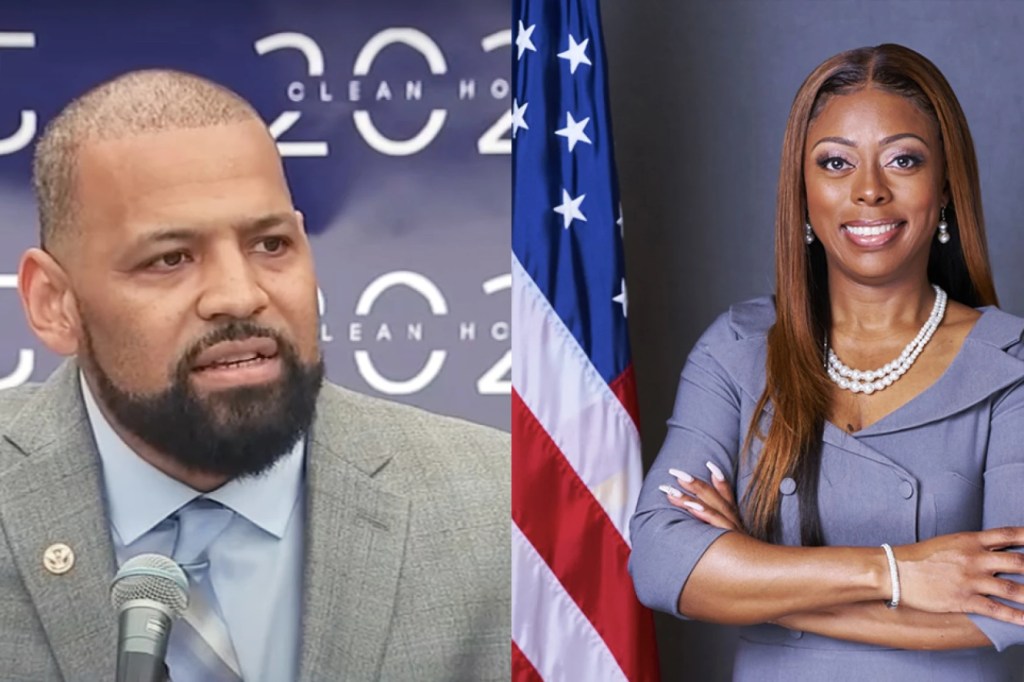
In the past few months, news has begun to filter about the actions of now former Mayor Tiffany Henyard of Dolton, IL. The small mayor of the Southland suburb has drawn increasing consternation of her spending habits from local residents of the village and her elected colleagues on the Dolton Board of Trustees. But corruption in small town America isn’t particularly new. What is different is the visibility of such corruption by a Black mayor against their mostly Black town. Witihin a political environment that continues to be disinvested in the idea of Black people participating in governance in any meaningful way outside of voting, this can be another stake in the coffin. And yet, there is also much to say about the state of Black suburbia as both a consequence of the Fair Housing Act and as an mechanism of integration of Black people into American society.
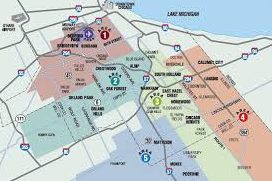
But let’s backtrack to some basics about the situation in Dolton. Dolton is one of the smaller suburbs to the south of Chicago proper, known locally as Southland. Because of its proximity to the city’s South Side, it has become a destination for those who live in adjacent neighborhoods seeking lower housing costs and a more suburban lifestyle with opportunities for home ownership. Unlike the regions northern and western suburbs, it hasn’t developed a clear satellite city that stands out – there is no Evanston or Aurora counterpart. Instead are a constellation of relatively small cities and villages, as Illnois state law defines them, none with a particularly strong local economy and brand that reaches outside the wider metro area.
What that has meant is that the region is a slow decline, dealing with the challenges of maintenance that all suburbs deal with as their infrastructure ages and reaches the cycle for replacement. Within this financial environment, the small cities and villages have become sites for deepening corruption as the proverbial pie shrinks and relationships to local officials become currency. Enter the story and its acting Mayor Tiffany Henyard.
As of writing this blog in February 2025, Mayor Henyard has just lost her primary for re-election in a seeming landslide to opponent Jason House. She has found herself the target of a federal lawsuit after a fight broke out at a city meeting back in January. She has also been scrutinized for her habit of making seemingly personal purchases on the dime of local taxpayers, leading to an investigation of her expenditures and a report of its results also published in January. But there is a wider question that should be asked about the intricacies of local government and how they function in a world where suburban growth is guaranteed, and by extension, there will be always be enough money to pay the bills.
What are the options in this situation? Dolton, if it continue to find itself in the red could do away with its current designation of village and be merged into a number of other villages within the same township. It could also raise taxes, which is never a popular proposition for local residents. Or, it could pursue a growth strategy – which would change the current landscape of almost exclusively single family homes to other options. Given the lack of demand in much of the region these days, I don’t imagine a sea of apartment buildings popping up around Dolton. But without a clear strategy about its future, Dolton can become another Ferguson – another black suburb stagnating in part from a lack of good leadership.
 An Urban Renewal
Leave a comment